- Research
- Expressions Spring 2026
Injectable Tumour Model from HKU
Paving the Way for Smarter Cancer Immunotherapy
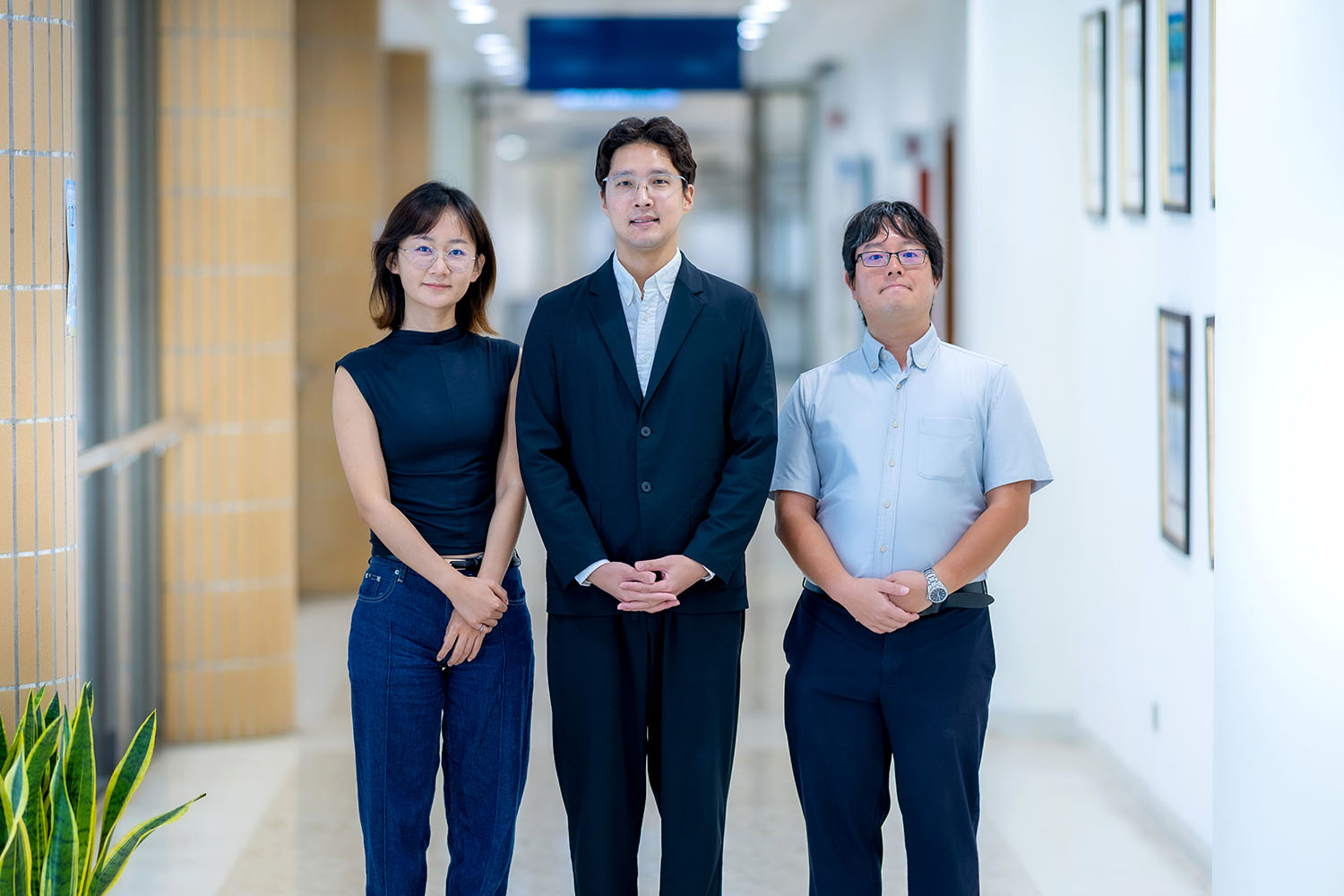
From left: Ms Ziqi Huang, Professor Sang Jin Lee and Professor Rio Ryohichi Sugimura
A research team led by the Faculty of Dentistry at The University of Hong Kong (HKU) has created a new kind of tumour model that could transform how scientists study cancer and develop next generation immune cell therapies.
Using a clever, non-surgical injectable hydrogel, the team has built a vascularised tumour system that more faithfully mimics how cancers grow and interact with blood vessels inside the body. The work, recently published in the journal Advanced Composites and Hybrid Materials, tackles one of oncology’s longstanding challenges: how to recreate realistic tumours in animals without complex surgery or unreliable models.
The study is led by Professor Sang Jin Lee, Assistant Professor in Biofunctional Materials at the HKU Faculty of Dentistry, in collaboration with Professor Rio Ryohichi Sugimura from the School of Biomedical Sciences in the LKS Faculty of Medicine at HKU. Together, they have developed a fully degradable, injectable, selfcrosslinking hydrogel made from carboxymethyl chitosan (CMCTS) and oxidized hyaluronic acid (oHA). This material is used to encapsulate high-density tumour cells and deliver them into mice through a simple injection.
Our platform not only faithfully recaptures the tumour microenvironment but, more importantly, provides a dependable tool for immune cell therapy research. This is particularly significant for advancing treatments for malignancies.
Once injected, the hydrogel forms a supportive scaffold that allows these cells to develop into solid tumours. Crucially, these tumours are not just cell masses; they are supplied by functional blood vessels derived from the host, closely mirroring the natural tumour microenvironment. Conventional tumour inoculation methods often scatter cells, leave behind biomaterial residues, or fail to develop realistic vascular networks. By contrast, this hydrogel system keeps tumour cells precisely at the injection site and supports the formation of clean tumour clusters with integrated vasculature. This level of control and realism is essential for testing how drugs and immune cells behave in and around tumours.
“The lack of reliable vascularised tumour models has long been a bottleneck in cancer research,” emphasised Professor Lee. “Our platform not only faithfully recaptures the tumour microenvironment but, more importantly, provides a dependable tool for immune cell therapy research. This is particularly significant for advancing treatments for malignancies.”
The team went a step further and demonstrated that their model is not just structurally realistic, but also functionally useful for immunotherapy research. They injected human macrophages—immune cells that can be engineered or harnessed to attack cancer—through the tail vein of mice. These cells successfully homed in on the hydrogel-induced tumours and adhered to the tumour tissue, proving that the model supports immune cell trafficking and infiltration much like real cancers do.
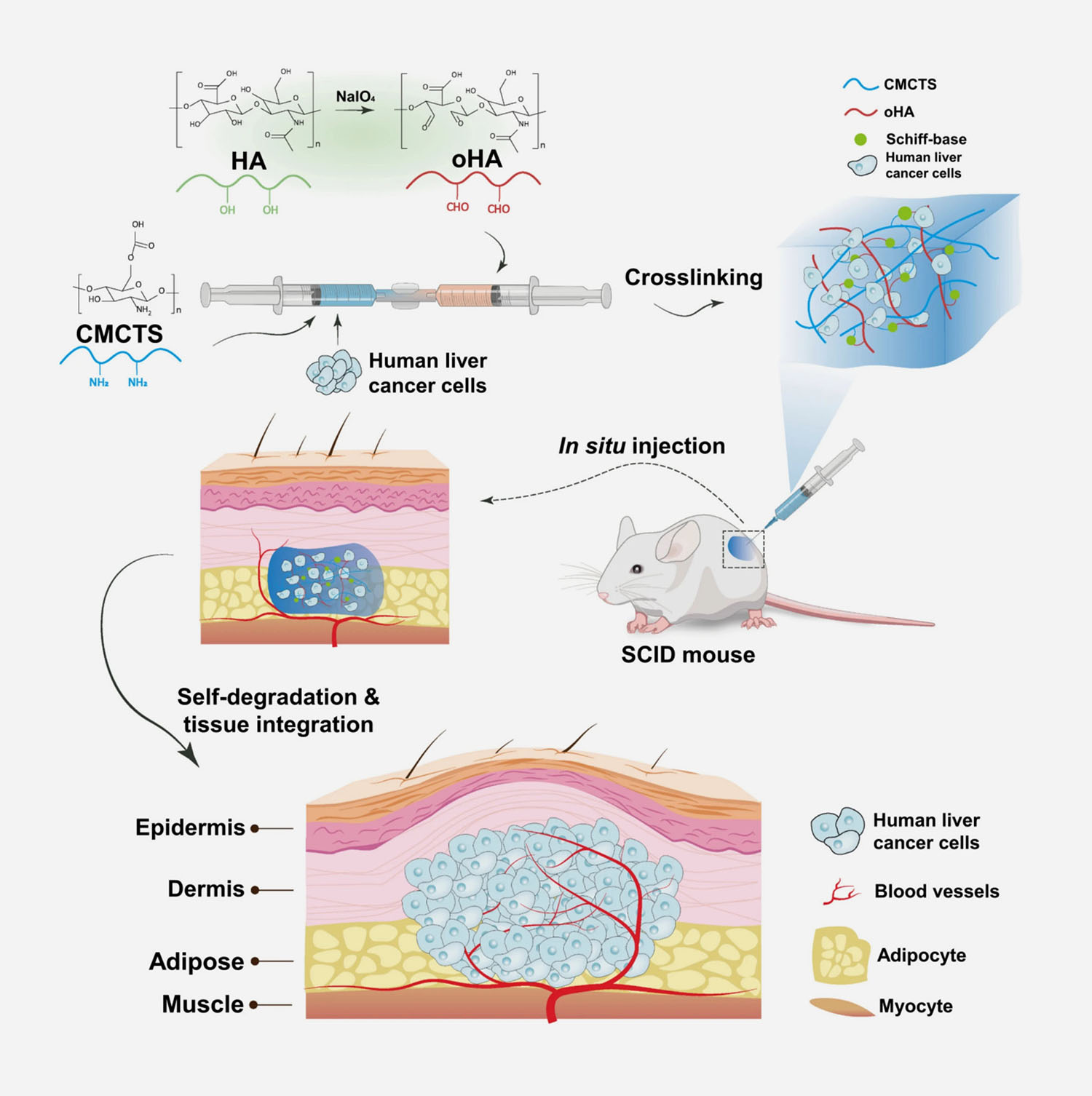
Schematic illustration of the preparation procedures of high-density human liver cancer cell–encapsulated CMCTs/oHA injectable hydrogel and their in vivo application.
This capacity is vital for evaluating how well potential cell therapies, such as engineered macrophages or other immune cells, can reach and penetrate solid tumours in living organisms. Professor Lee highlighted the translational potential of the work: “This model will serve as a vital conduit for the research and development of cell therapies to treat various cancers, such as oral cancer, in the near future, offering new possibilities for improving patient outcomes.”
For Hong Kong and beyond, the implications are far reaching. A more reliable, injectable vascularised tumour model can shorten the path from laboratory concepts to clinically relevant treatments, by allowing more accurate testing of immunotherapies before they reach human trials. It also lowers the technical barrier for laboratories that lack surgical expertise but want to work with sophisticated tumour systems.
By combining advanced biomaterials engineering with cancer biology and immunology, the HKU-led team has opened a promising new route for cancer research. Their hydrogel-based model is more than a technical innovation; it is a practical platform designed to accelerate the development of therapies that harness the immune system to fight cancer—and ultimately to bring better treatment options to patients.